

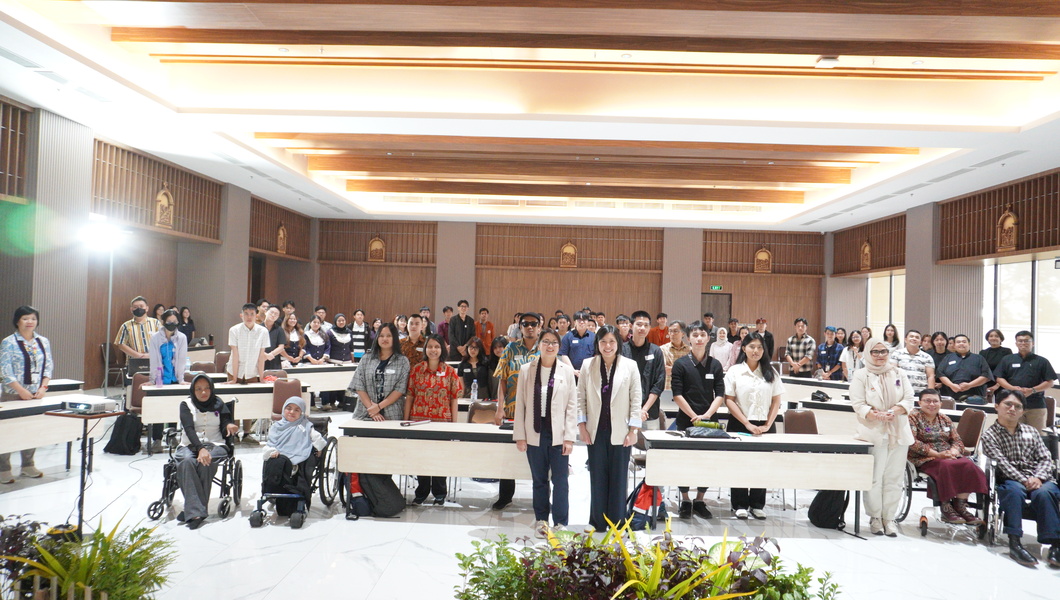
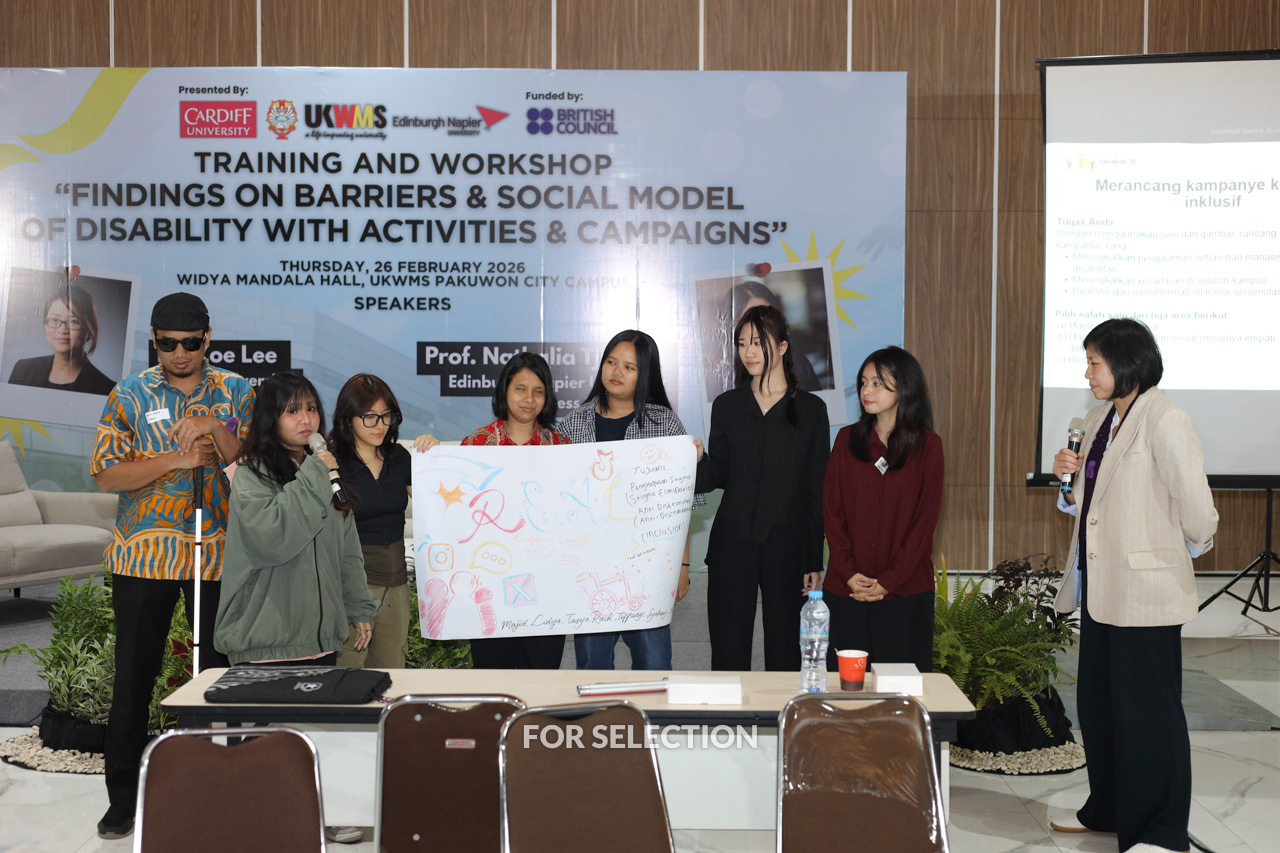
Universitas Katolik Widya Mandala Surabaya (UKWMS), in collaboration with Cardiff University and Edinburgh Napier University from UK, and supported by the British Council, organized a workshop, “Findings on Barriers & Social Model of Disability with Activities & Campaigns.” It was held on 25-26 February 2026, at UKWMS Pakuwon City campus.
On the first day, the event was attended by higher education leaders from various institutions across Indonesia. Meanwhile the attendees for the second day were students with disabilities and non-disabled students from several universities in East Java.
This international collaboration served as a platform to present the findings of a global research project of the three universities while also developing campaign strategies aimed at fostering a more inclusive higher education environment for people with disabilities.
The initiative also supports the achievement of the Sustainable Development Goals (SDGs), particularly SDG 4: Quality Education, SDG 10: Reduced Inequalities, and SDG 17: Partnerships for the Goals, through strengthening equal access to higher education and promoting global collaboration in social inclusion practices.
“Today’s event is a valuable opportunity for all of us to learn more about understanding the needs of people with disabilities, especially among students. Disability inclusion is a shared responsibility,” said Dr. F. V. Lanny Hartanti, S.Si., M.Si., the Vice Rector I of UKWMS, in her opening remarks.
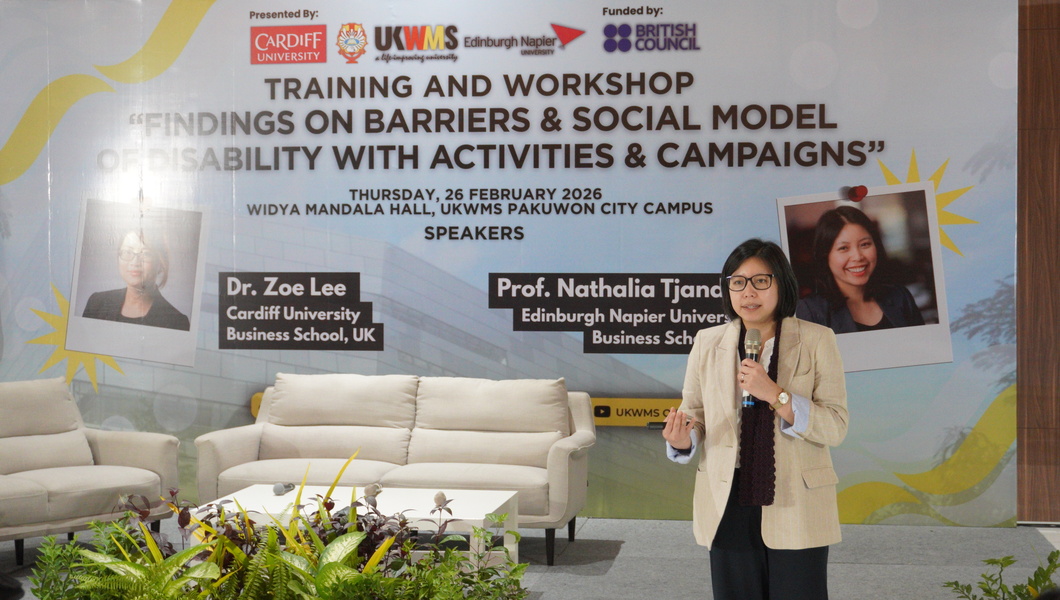
The research findings were presented by two researchers involved in the study, Dr. Zoe Lee from Cardiff University Business School, UK, and Prof. Nathalia Tjandra from Edinburgh Napier University Business School, UK. Their presentations highlighted the various barriers still faced by people with disabilities and the application of the Social Model of Disability within the context of higher education.
One of the key outcomes of the research project is a program called Sahabat-ID.
“Choosing this name took quite a long time. Our hope is that all of us can become friends who help, accompany, and protect people with disabilities,” said Prof. Nathalia. More information about the program can be found at sahabat-id.com.
Through the Social Model of Disability approach, disability is understood not as an individual limitation, but a consequence of social and structural barriers that require systemic changes at the institutional level. This perspective aligns with the principles of sustainable development, which place equal access and participation as fundamental pillars of a fair and inclusive educational environment.
“There needs to be a greater sensitivity and awareness to directly ask people with disabilities what kind of support or assistance they need,” explained Zoe.
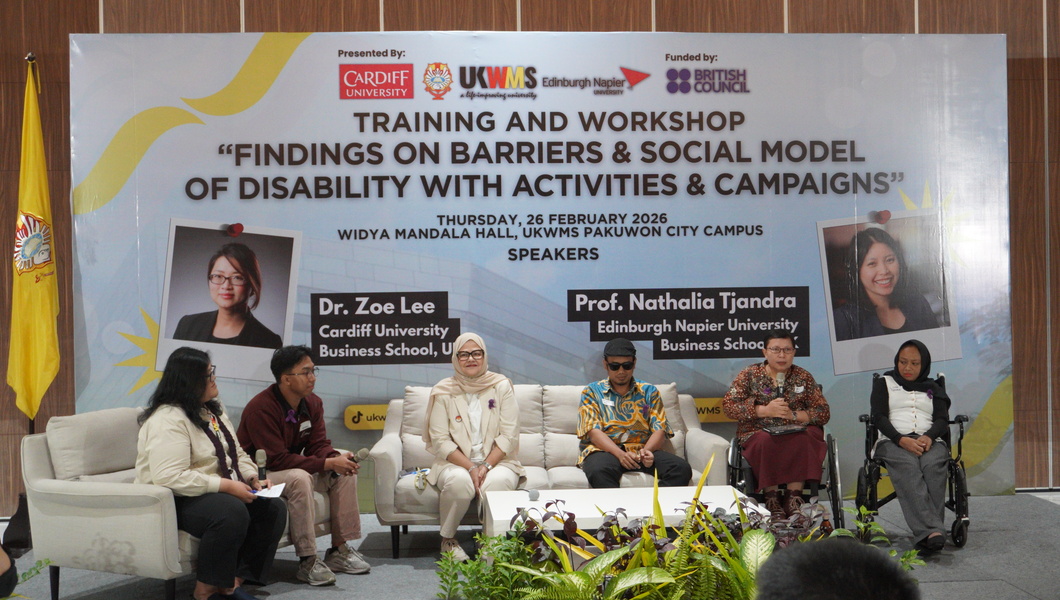
Following the presentations, the event on day 2 continued with a panel discussion moderated by Ayu Gayatri, S.Sos., a staff of the UKWMS International Affairs Office. The panelists included:
- Abdul Majid, S.E. – a postgraduate student at Airlangga University, Surabaya, Indonesia
- Fira Fitri F., S.E., M.KP. – a postgraduate student at Airlangga University, Surabaya, Indonesia
- Gracius Randy Wahyu J. – an undergraduate psychology student at Universitas Katolik Widya Mandala Surabaya, Indonesia
- Dr. Rachmita Maun Harahap, S.T., M.Sn. – a member of the National Commission on Disability of Indonesia and a Lecturer at Mercu Buana University, Jakarta, Indonesia
- Wuri Handayani, Ph.D. – the Head of the Disability Services Unit at Gadjah Mada University, Yogyakarta, Indonesia
The panelists shared their experiences regarding the various barriers still encountered by people with disabilities in educational settings, as well as the accommodations needed to create equitable learning environments.
“For all of you, if you meet a person with visual impairment, do not hesitate to interact. For example, gently tap the end his or her shoulder and offer assistance,” said Abdul Majid, one of the panelists.
Through this event, UKWMS reaffirmed its commitment to building a higher education ecosystem that is inclusive, participatory, and sustainable, where every individual has equal opportunities to grow and contribute optimally to society. (Red/LH)
The original article in Bahasa Indonesia is available at https://ukwms.ac.id/ukwms-kolaborasi-dengan-uk-pahami-hambatan-dalam-model-sosial-disabilitas/
Source: UKWMS