

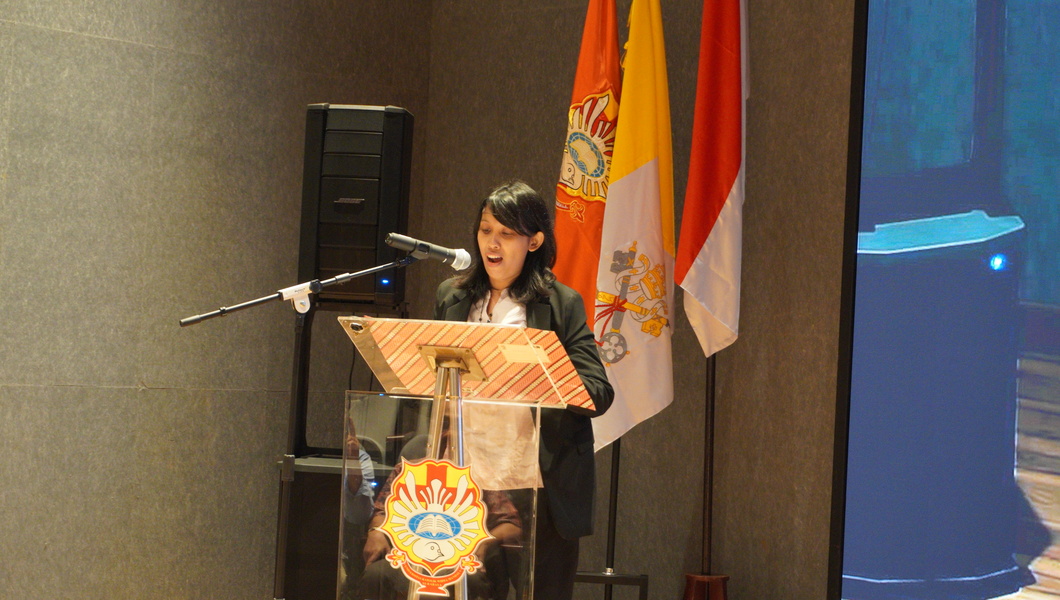
The Indonesian Association of Philosophy and Theology (AFTI), in collaboration with the Faculty of Philosophy of Universitas Katolik Widya Mandala Surabaya (UKWMS), had the opportunity to work together. AFTI organized the 3rd International Symposium: “Humanity, Justice, and Ecological Schemes – Rethinking Ethics, Technology, and Sustainability,” with the Faculty of Philosophy of UKWMS as the host. The event took place from Wednesday to Friday, March 4-6, 2026, at the IMAVI Building, UKWMS Pakuwon City campus.
This international symposium was attended by academics, researchers, and students from various institutions. They discussed issues related to humanity, social justice, and increasingly complex ecological challenges in the era of technological development. The forum became na interdisciplinary space for dialogue to reconsider the role of ethics, technology, and human responsibility in maintaining environmental sustainability and collective life.
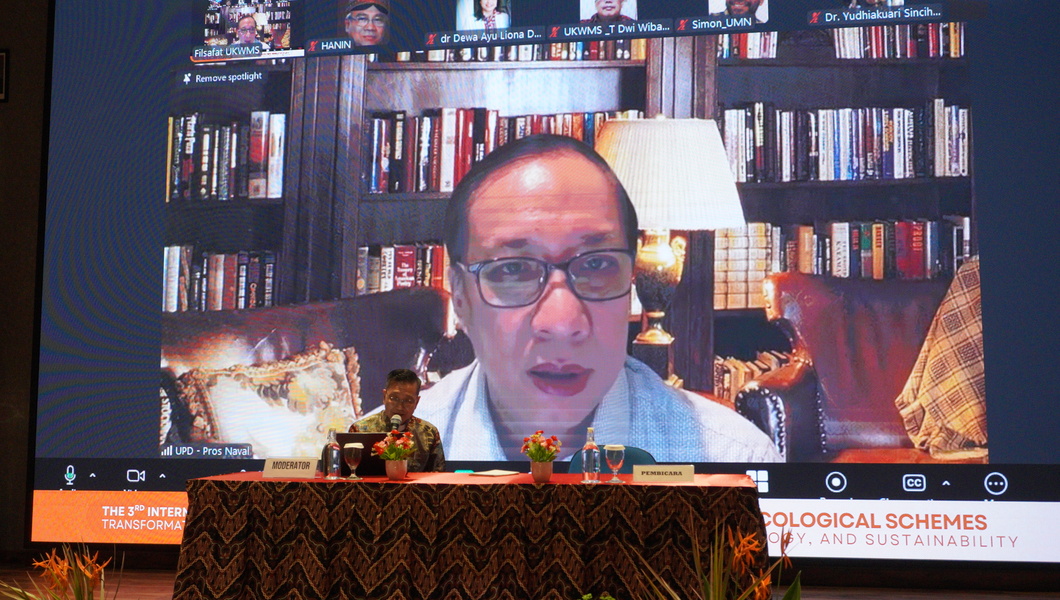
At this symposium, Prof. Prospero C. Naval Jr. from the University of the Philippines participated online as the keynote speaker, with Rev. Dr. Ramon Antonio Eguia Nadres serving as moderator. His topic was “From Pixels to Wisdom: AI and the Ethics of Contemplative Care for Our Oceans.” He presented perspectives on technology and sustainability, particularly in the context of the development of artificial intelligence and humanity’s ethical responsibility.
“This research argues that the synergy between machine perception and linguistic intelligence facilitates the practice of Contemplative Care. Ultimately, we show that AI (Artificial Intelligence) can fulfill its highest purpose when it serves the Logos of the natural world, transforming how we perceive and care for our oceans,” explained Prof. Naval.
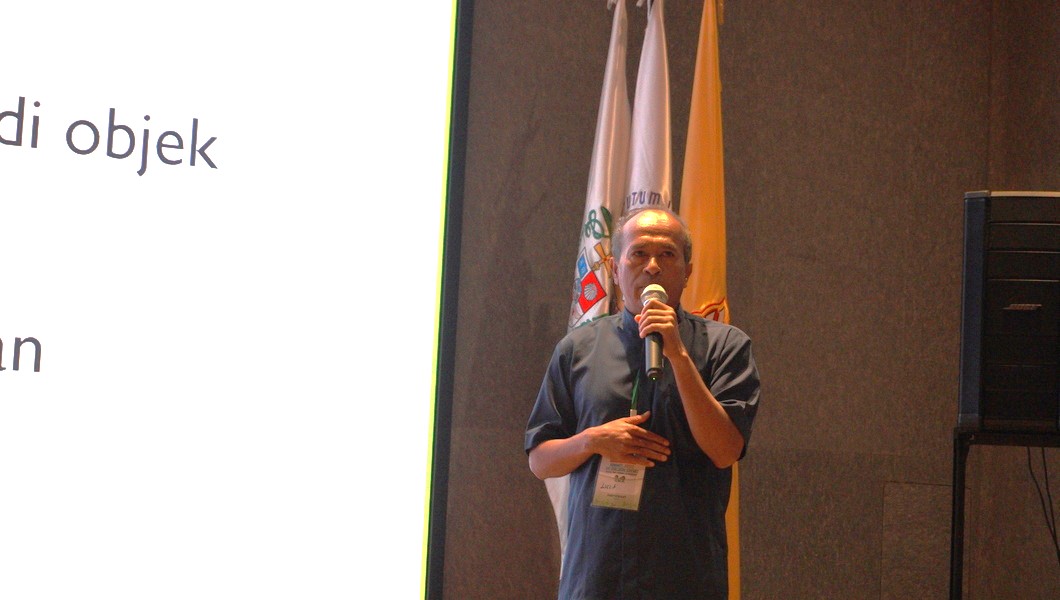
In addition to Prof. Naval, Rev. Dr. Luis Gouveia Leite from the Instituto Superior de Filosofia e de Teologia Dom Jaime Garcia Goulart (ISFIT), Dili, Timor Leste, was also present. He presented his research, “Human-Plant Ethical Relations in Hans Jonas and Lulik’s Ethics of Responsibility in Timor Leste.”
Beginning his presentation, Father Luis explained the meaning of lulik. Lulik embodies sacred norms, principles of prudence, and moral sanctions that concretely regulate the relationship between human and nature. However, this has not been systematically positioned as a normative ethical framework within contemporary moral philosophy.
“This research aims to critically analyze the relationship between humans and plants using Hans Jonas’ ethics of responsibility and the concept of Lulik in Timorese culture. It also aims to formulate the possibility of synthesizing the two as a foundation for developing a contextual and sustainable plant ethics,” explained Father Luis.
Following the presentations by the two speakers, participants continued with presentations in five discussion groups with the following subtopics:
1. Ecological Breakdown and Human Responsibility,
2. Dehumanization and Disconnection from Nature in the Age of Technology,
3. Social Inequality, Ecological Injustice, and Structural Violence,
4. Cultural and Moral Disorientation in the Ecological Crisis,
5. Philosophy, Faith, and the Future of Humanity.
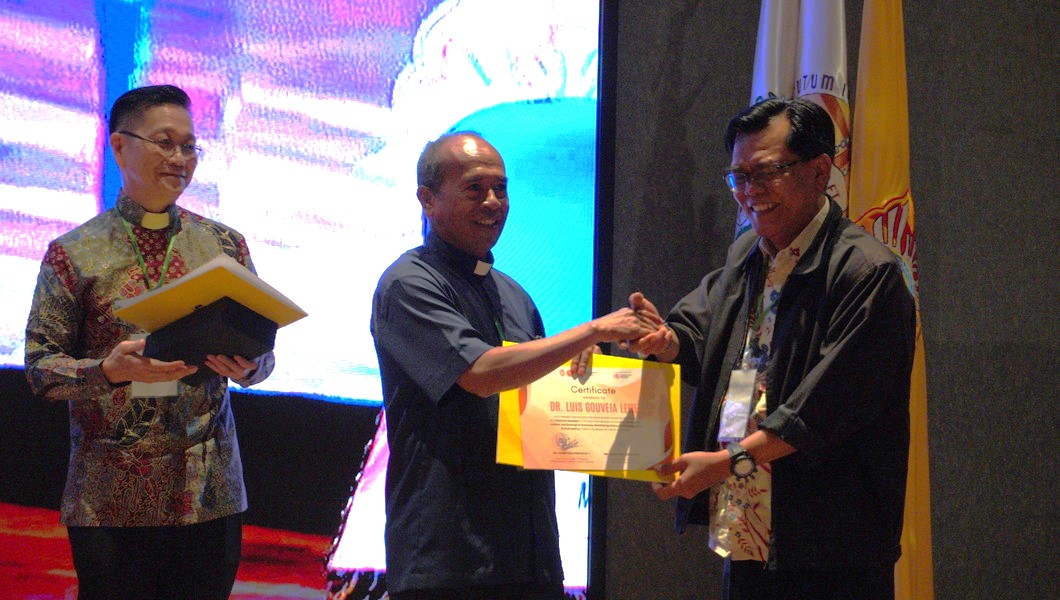
Within each subtopic, both students and lecturers presented their research. Through this event, UKWMS hopes to strengthen international academic networks while encouraging the emergence of reflective and solution-oriented ideas to respond to various humanitarian and environmental challenges at the global level.
The original article in Bahasa Indonesia is available at https://ukwms.ac.id/ukwms-dan-afti-soroti-etika-teknologi-dan-keadilan-ekologis/
Source: UKWMS