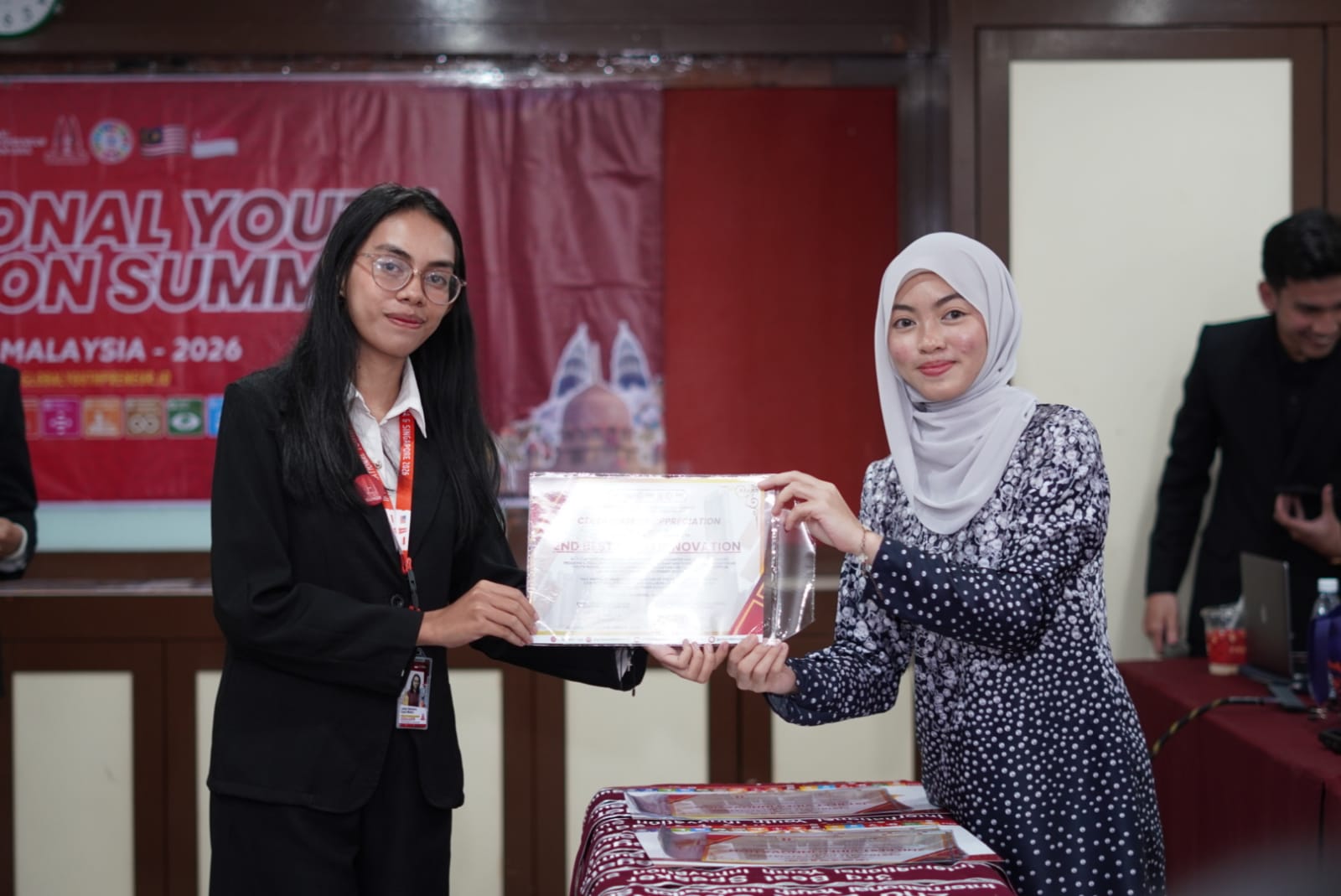
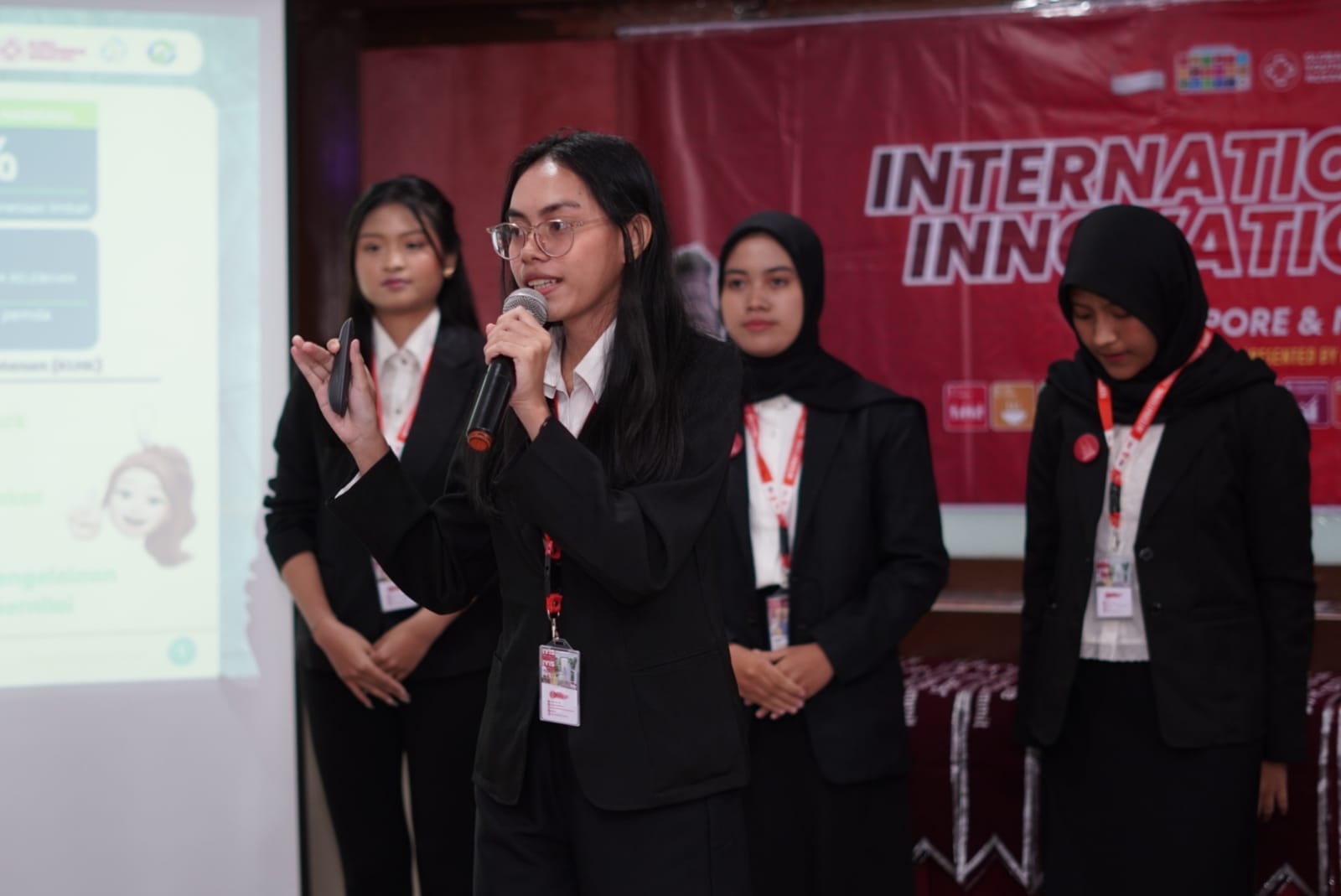
Kupang, Indonesia – Julian Barbara Lipat Mukin, a student of the Management Study Program at Widya Mandira Catholic University (UNWIRA), has once again brought pride to the university on the international stage. Julian secured Second Place for Best Digital Innovation Video at the International Youth Innovation Summit (IYIS) Chapter Malaysia and Singapore, held from January 26–29, 2026.
The competition carried the theme “Youth Digital Innovation: Pioneering Innovation for Tomorrow’s Leaders in Achieving Sustainable Development Goals (SDGs).” In the event, Julian, who was part of a six-member team, presented a digital-based waste management innovation as a sustainable solution to promote public awareness and behavioral change.
Julian explained that waste management is not merely a matter of facilities but also concerns people’s habits and awareness.
“Many people understand its importance, but they are not yet accustomed to practicing it. Therefore, we chose a digital innovation approach so that education would not feel patronizing but instead be presented as an engaging experience,” he said.
The innovation introduced by the team is an application integrated with a photobooth called Wasteback. The application operates similarly to a waste bank system using a drop-point mechanism. Through Wasteback, users can collect points from their waste management activities, which can later be exchanged for various products such as tote bags, stuffed toys, and shopping vouchers.
Through this system, waste-sorting education is expected to become more creative, participatory, and sustainable.
“So far, waste-related campaigns often stop at awareness programs. We wanted to provide a solution that encourages active participation, builds habits, and instills environmental awareness from a young age, rather than simply providing information,” Julian explained.
He added that the Wasteback photobooth is designed to be installed in schools and public consumption areas that generate significant amounts of waste.
In addition to the competition, Julian also gained valuable academic experiences through visits to the National University of Singapore (NUS) and Universiti Malaya.
“At NUS, I observed how a culture of discipline, the lecture and tutorial learning system, and a highly supportive campus environment foster critical and innovative thinking. Meanwhile, at Universiti Malaya, I learned about a collaborative academic atmosphere, the effective use of learning facilities such as libraries, and a learning culture that encourages students to be active participants,” he said.
According to Julian, these experiences have become valuable assets that he hopes to adapt in developing innovation and nurturing young talent in Indonesia.
Furthermore, Julian believes that UNWIRA has played a positive role in supporting students’ potential development.
“The university not only encourages learning in the classroom but also provides opportunities for students to participate in competitions, self-development programs, and off-campus activities that broaden their perspectives,” he remarked.
He also emphasized that the support of lecturers is a crucial factor in encouraging students to take risks and develop innovative ideas.
“Moving forward, this role can be strengthened by creating more opportunities for collaboration and mentorship so that students’ ideas can generate a tangible impact,” he concluded.
Julian hopes that future UNWIRA students will not only excel in technological competence but also possess social awareness and the courage to serve as agents of change within society.
*Article’s link to webpage: https://unwira.ac.id/home/detail_berita/2152?slug=mahasiswaunwira-raih-juara-2-inovasi-digital-terbaik-di-ajang-internasional-iyis-malaysia-singapura