Assumption College looks at disaster preparedness in the Philippines as more than just a theoretical lesson—it is a critical life skill and a direct expression of our Christian stewardship. For students enrolled in the National Service Training Program (NSTP)—a mandatory civic education and defense readiness curriculum designed to foster public service—the transition from learning these concepts in the classroom to deploying them in the field bridges the gap between academic instruction and civic responsibility.
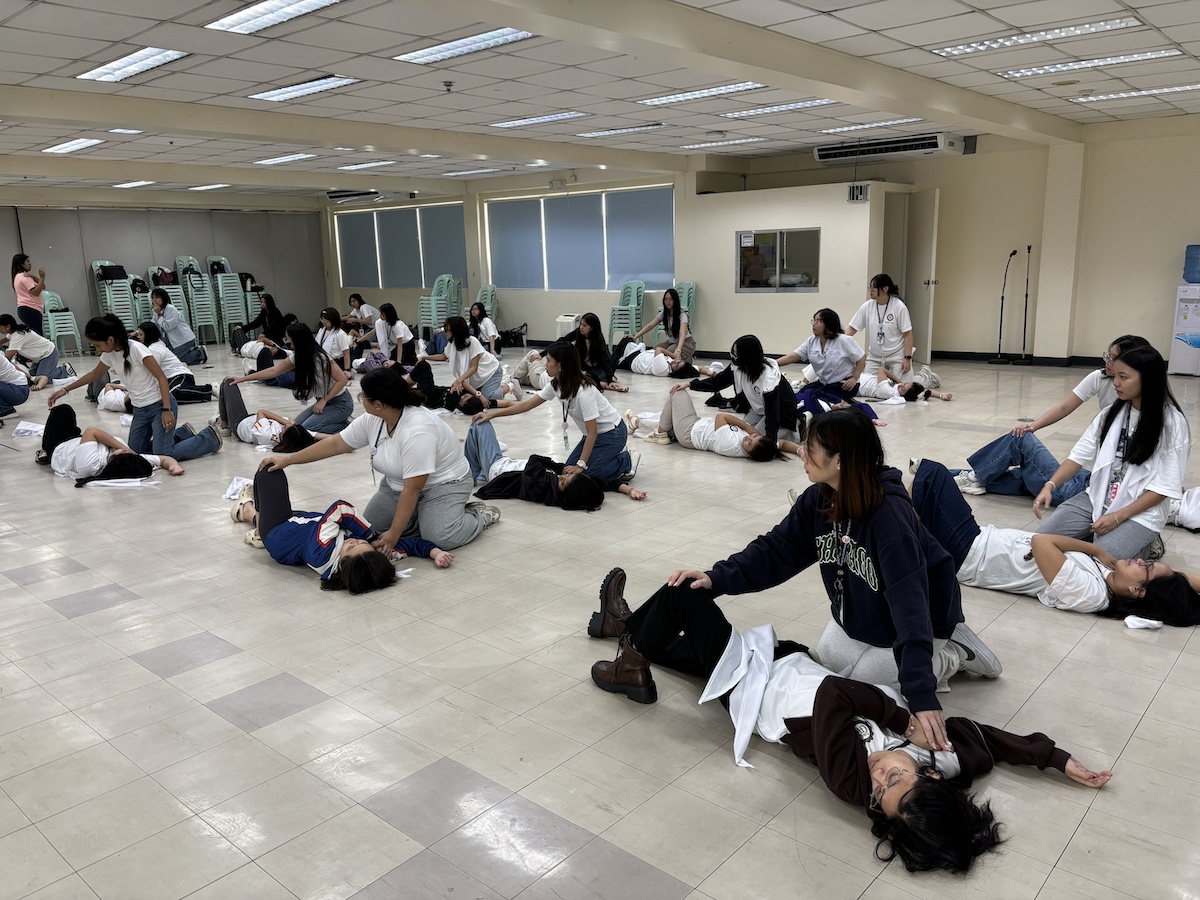
During their NSTP 1 course, which emphasizes classroom-based instruction and foundational civic consciousness, students undergo intensive hands-on training for disaster emergency management, mastering core emergency response tactics and basic life-saving skills. For their NSTP 2 community immersion, where the curriculum shifts from theoretical learning to active grassroots deployment, students from Assumption College applied this training directly to a beloved sister community through an impactful project titled “G.O. S.A.F.E.: Go-Bag Orientation for Safety Awareness in Fire and Earthquake.” This initiative transformed thirty Grade 5 students at the San Juan Nepomuceno School in Malibay, Pasay City—a parochial center of transformative education also run by the Religious of the Assumption—from vulnerable onlookers into confident, safety-minded individuals.
Anchoring Service in Faith, Action, and Leadership
At Assumption College, this civic deployment is deeply rooted in the institution’s holistic approach to student formation, mirroring our shared mission as Catholic higher education institutions. From their very first year, NSTP students are intentionally introduced to the principles of transformative servant leadership. Assumption students are formed to be Women of Faith and Women of Action. Consequently, their engagement with vulnerable communities is never viewed merely as a civic compliance requirement, but as a spiritual and social journey.
Because both Assumption College and San Juan Nepomuceno School share the same foundational charism of the Religious of the Assumption, this engagement became a profound exercise in communal solidarity. After every interaction and community engagement, students are guided to deeply reflect on their experiences using the traditional See-Judge-Act framework—a methodology that challenges them to analyze social realities through the lens of Catholic Social Teaching and the Gospel. To process these encounters, NSTP students document their personal insights, challenges, and spiritual breakthroughs in reflection journals. This practice is deliberately tied together with their theology classes, creating a seamless integration that ensures genuine faith formation, nurtures a lifelong commitment to social justice, and puts faith into concrete action.
The Genesis: Gaps Identified in the Community
The project was conceptualized by the college students themselves, following a comprehensive Community Needs Assessment (CNA) conducted at the San Juan Nepomuceno School. While a survey revealed that 100% of the Grade 5 students had participated in standard institutional earthquake drills, severe gaps persisted in their practical readiness:
- 70% of the classrooms lacked a functional, ready-to-use go-bag.
- 66% of the students did not consistently carry or have access to a basic first-aid kit.
- Over half (63%) did not know the location of their nearest community evacuation center, indicating an extreme reliance on adult direction during sudden emergencies.
Recognizing that theoretical awareness does not automatically equate to survival readiness, the Assumption College NSTP students designed the G.O. S.A.F.E. initiative to instill true autonomy and self-reliance in the young learners.
Activating the Training: The Three Pillars of G.O. S.A.F.E.
The NSTP students translated their advanced disaster emergency management training into three interactive, age-appropriate workshops executed over a targeted training block.
1. “Let’s Go Go Bag” (Emergency Necessities & First Aid)
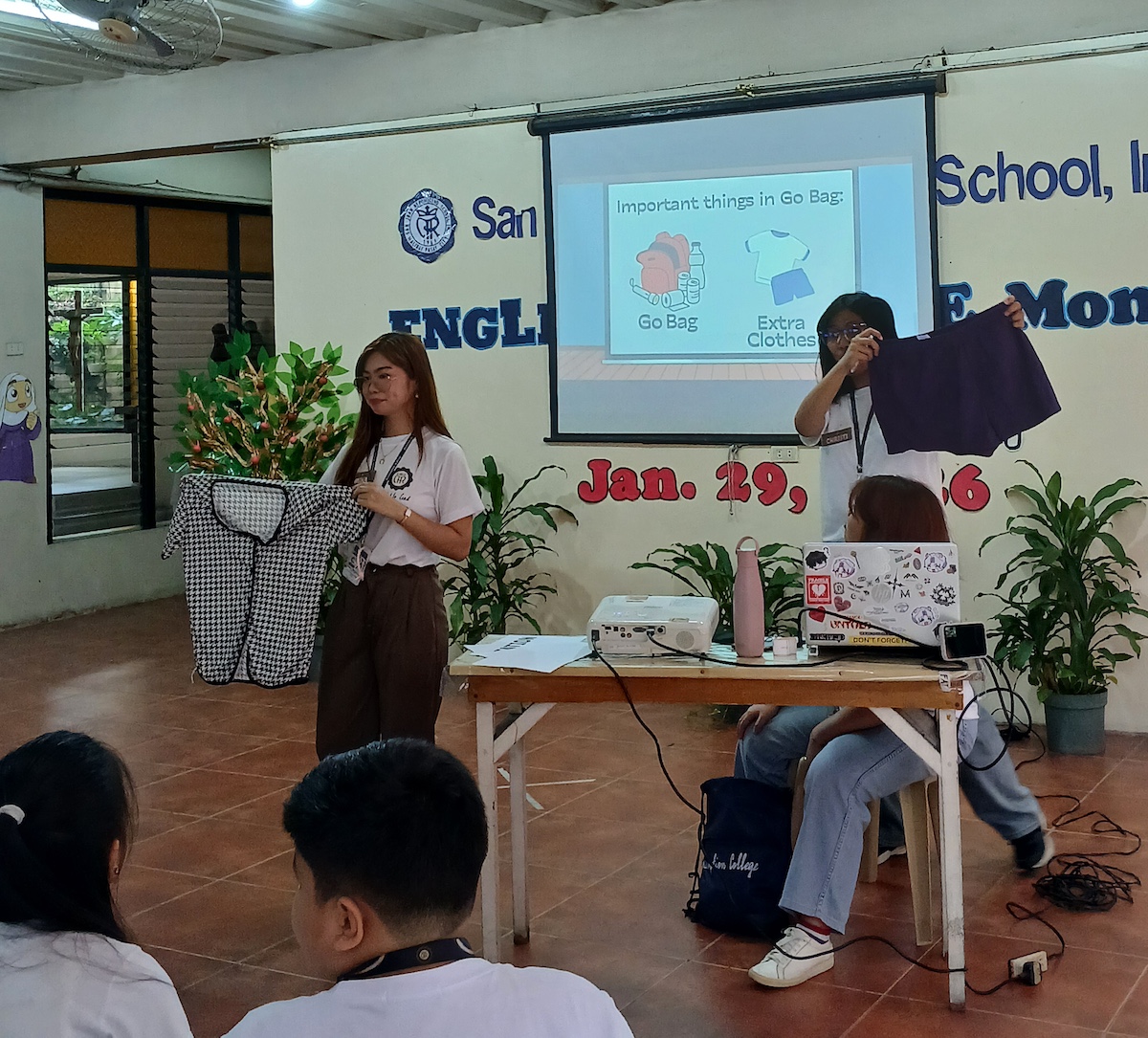
The opening workshop reframed the concept of an emergency backpack from a simple school object into a “72-hour lifeline”—an emergency go-bag designed to keep the Grade 5 students self-sufficient for three days following a disaster. They were taught the exact purpose of survival items like flashlights, whistles, ready-to-eat meals, and medical supplies.
Moving beyond lectures, the NSTP students conducted a hands-on triangular bandaging session. The elementary students actively practiced executing basic square knots and applying bandages for minor injuries. The workshop concluded with a fast-paced “Pack Your Go-Bag” timed challenge, forcing teams to prioritize critical survival items over non-essentials under artificial time pressure to simulate real-world disaster stress.
2. “Escape the Blaze” (Fire Safety Mastery)
Addressing the lack of fire response preparedness, this module utilized a dynamic “4 Corners” decision-making game. Students navigated simulated scenarios charting actions before, during, and after a fire emergency (e.g., encountering heavy smoke or locating fire exits).
The physical training emphasized low-crawl evacuation techniques to avoid smoke inhalation and prohibited dangerous behaviors like returning to a burning structure for personal belongings. As a tangible takeaway, the children created a personalized “Help ID” (Health Emergency Life Profile) badge featuring critical medical data, emergency contact hotlines, and simplified fire safety protocols.
3. “Escape the Quake!” (Earthquake Evacuation Mastery)
The final pillar addressed the country’s exposure to seismic hazards along the Pacific Ring of Fire. The NSTP students corrected common misconceptions regarding structural safety zones, teaching Grade 5 students how to identify immediate hazards (such as windows and unanchored overhead objects) in both home and school settings via localized mapping exercises.
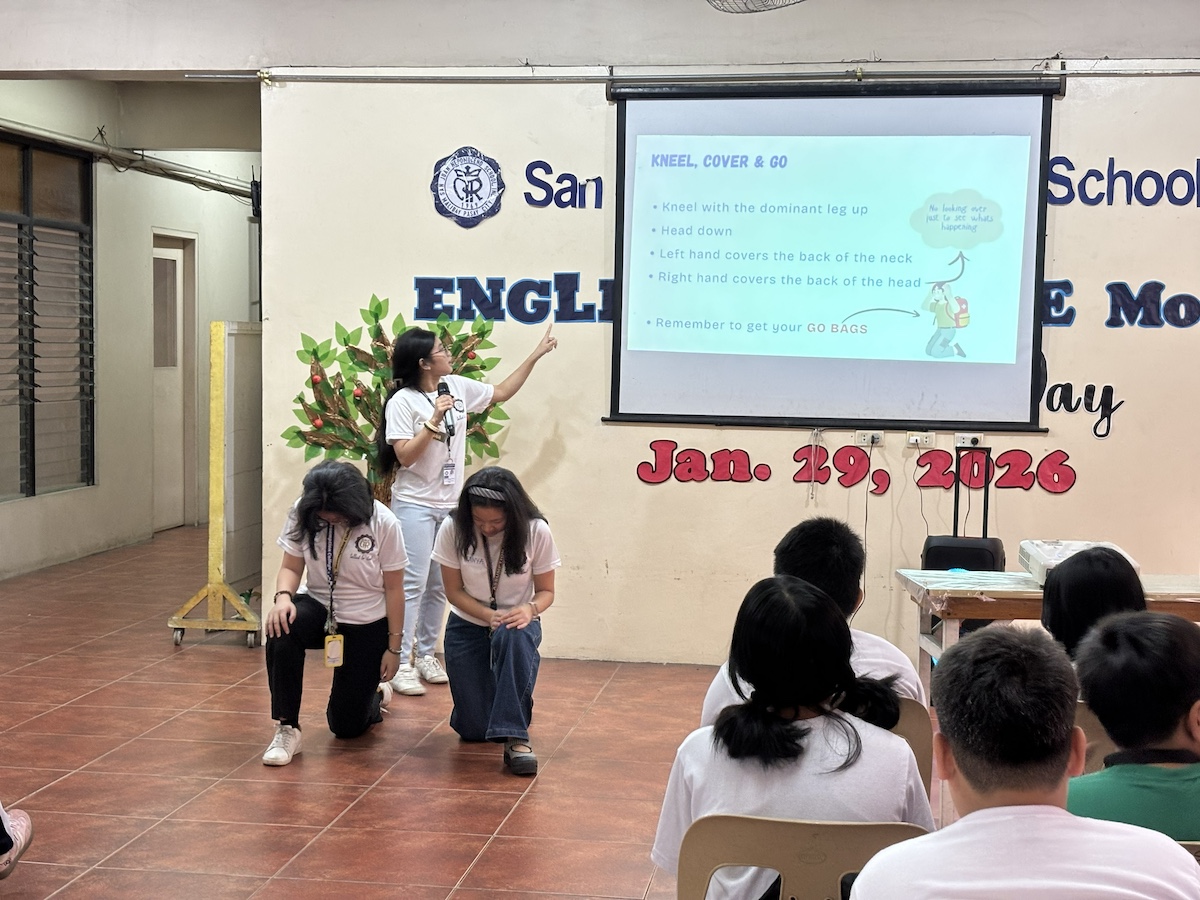
The children actively drilled the “Kneel, Cover, and Go” (Duck, Cover, and Hold) evacuation sequence. To eliminate a dangerous reliance on ad-hoc adult commands, the final drill tested student leaders on executing precise headcounts, managing peer panic, and mapping safe paths to the nearest designated evacuation facility—the Marcela Marcelo Elementary School.
The Impact: Transforming Vulnerability into Empowerment
By grounding their efforts in Assumption College’s institutional thrust, “We Walk Together with Hope and Care,” the NSTP students effectively localized disaster risk reduction management (DRRM) as an act of solidarity and communal love.
This structured, hands-on approach allowed the Grade 5 students to conquer initial anxieties, shifting them from a state of total dependency during crises to becoming proactive safety ambassadors. Because both institutions share the maternal care and educational vision of the Religious of the Assumption sisters, this mentorship fostered an incredible bond of trust. Through peer-to-peer knowledge sharing, the NSTP program demonstrated that when given the proper training, tools, and confidence, even the youngest members of our community can build the self-efficacy required to save lives.
References: Republic Act No. 9163 (NSTP Act 2001)