A Reflection of the Triune God
Holy Name University commemorated the 150th Anniversary of the Society of the Divine Word (SVD) and honored the birth anniversary of its founder, St. Arnold Janssen, through the solemn dedication of the Immaculate Spouse of the Holy Spirit Church. The church stands as a visible expression of the university’s commitment to nurturing faith.
“Vivat Deus Unus et Trinus in Cordibus Nostris”
The Symbolic Structure: Rooted in the Trinity
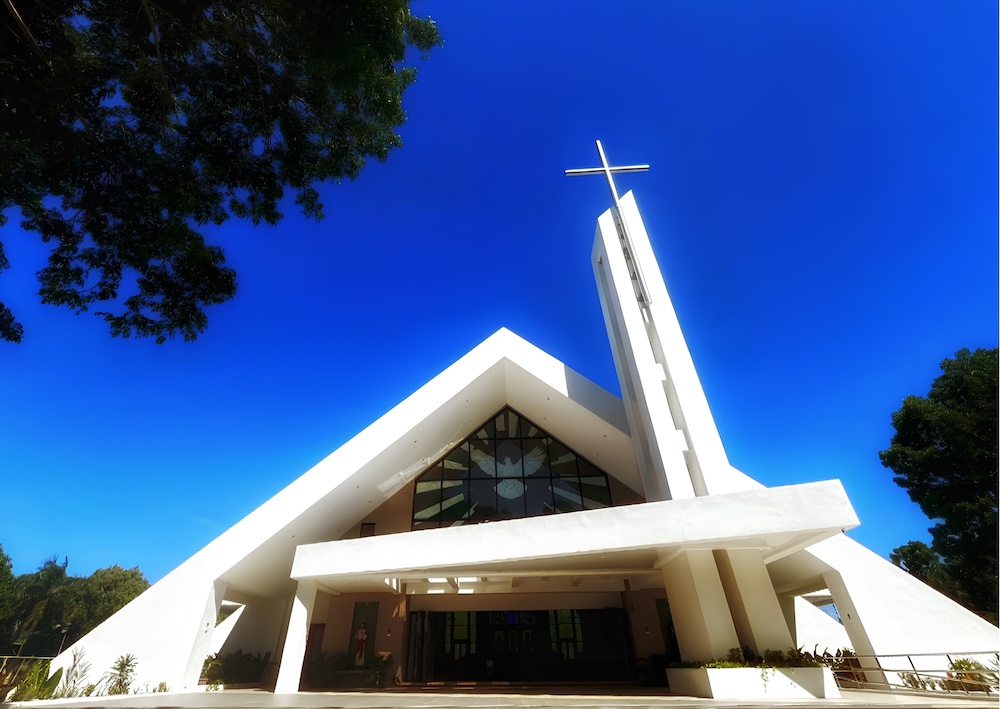
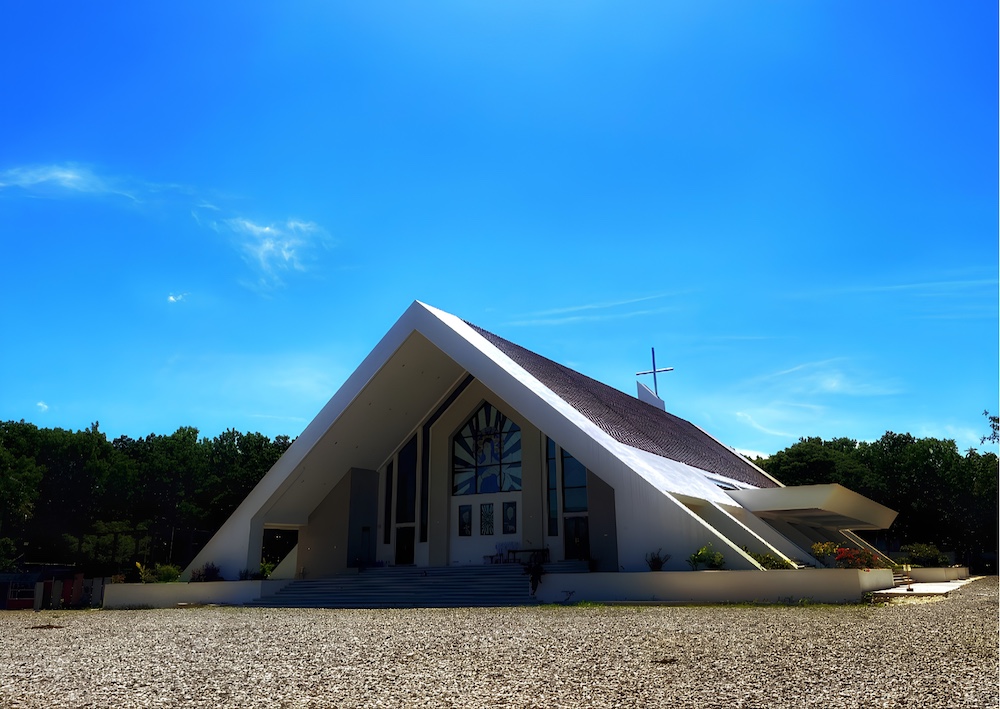
The church’s triangular form is a symbol of the Holy Trinity, which was at the heart of the spirituality of St. Arnold Janssen. The mystery of the Holy Trinity was expressed through the triangular form of the building. The three sides of the triangle represent the Father, the Son, and the Holy Spirit. Just as the three sides of a triangle are inseparable and form one figure, the Triune God invites all people into a communion of love and unity. The upward point of the triangle also reminds us that our lives and mission are directed to the Father who is the principal rest of the Blessed Trinity to whom all are to return.
Beyond its symbolism, the architect intended the structure itself to become an expression of prayer. The church’s triangular form creates the silhouette of a person’s arms and hands clasped in prayer, transforming the building into a quiet gesture of worship that welcomes every person who enters.
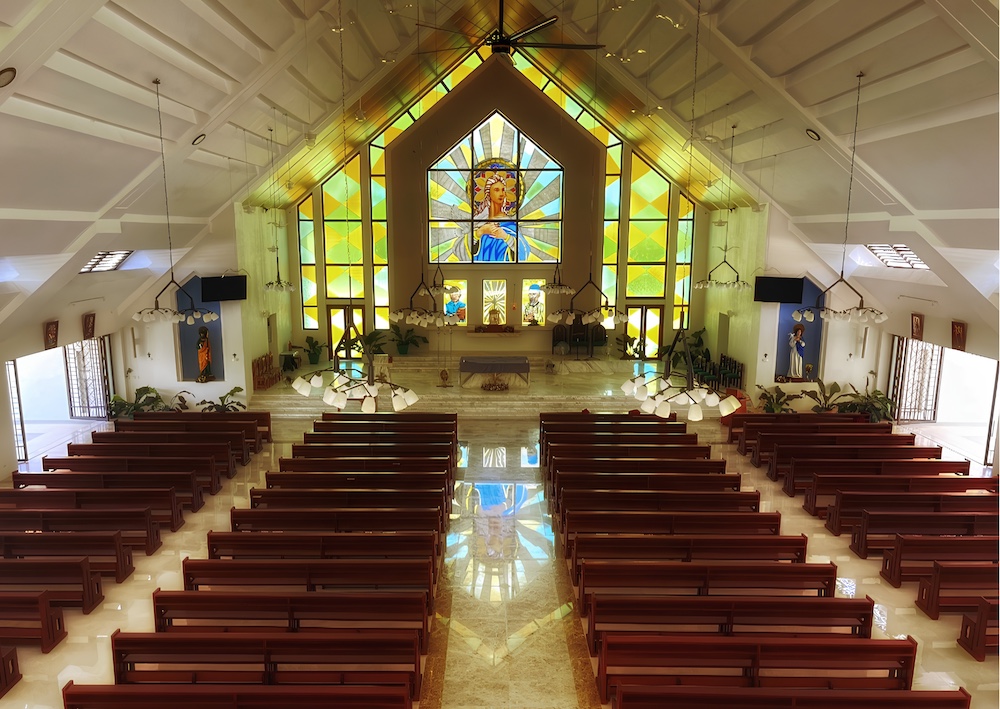
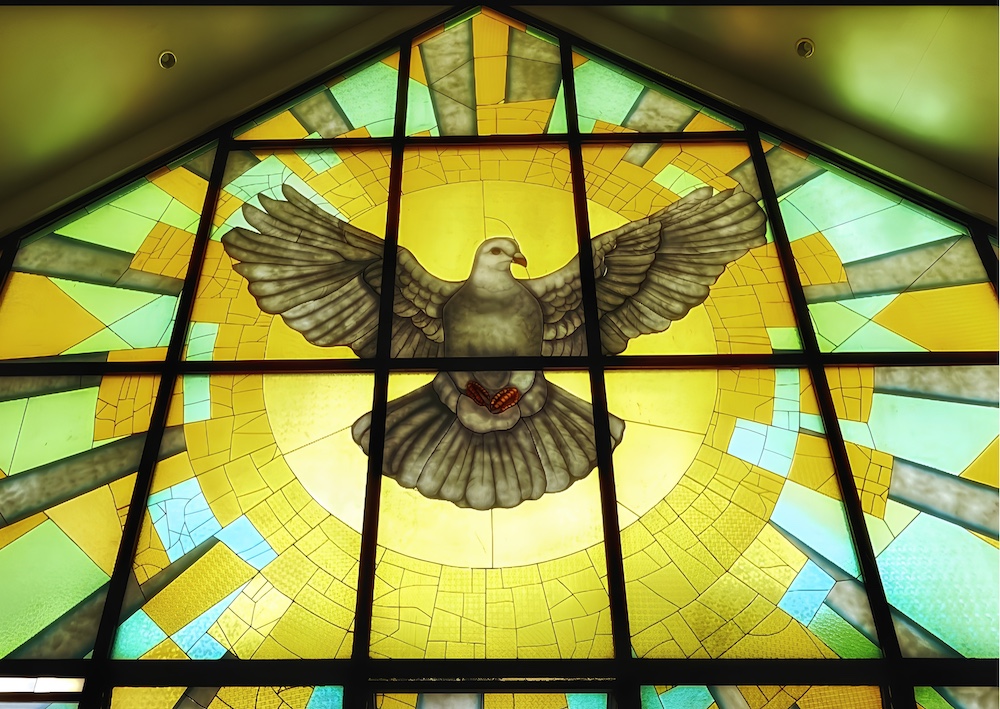
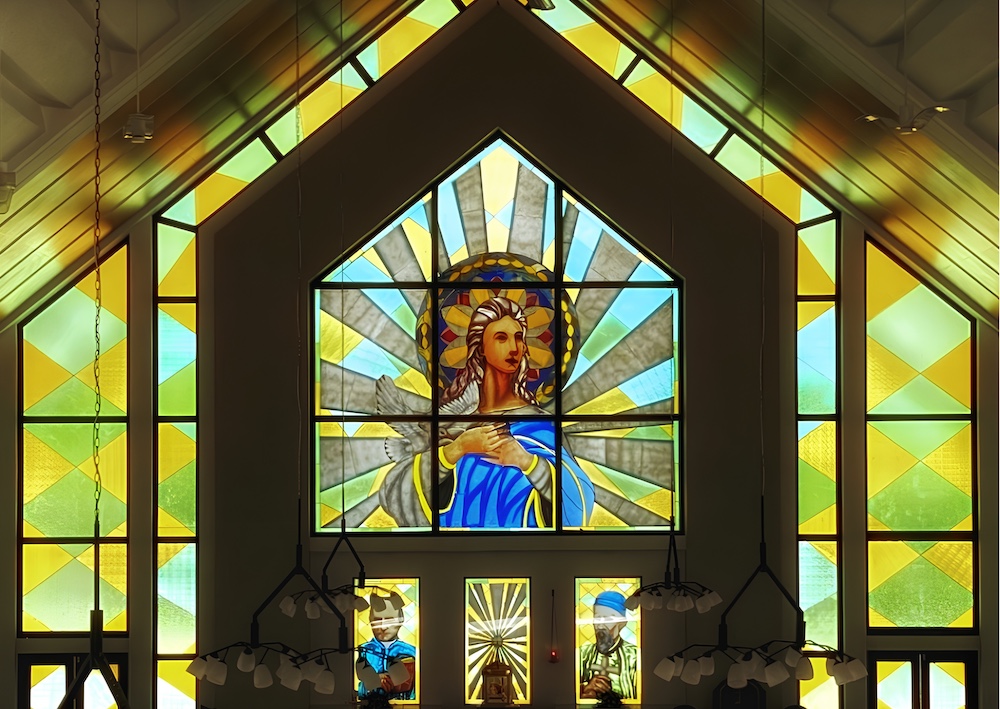
In the stained glass above the nave, the Holy Spirit appears as a dove hovering over those gathered in prayer, a quiet sign of God’s nearness and promise fulfilled. Like the dove sent out by Noah; first returning in patient waiting, then bearing an olive branch of peace, and finally going forth in the renewed world, becomes a symbol of hopeful expectation and answered promise. The Holy Spirit is not distant or abstract but rests upon God’s people, the same way He descended upon Christ and remained. When Scripture says the Spirit came “like a dove”, it is not trying to describe what the spirit looked like, but how He came: in a way that brings rest and assurance. From above the sanctuary, this image gathers the faithful beneath a living assurance: God is with you, and His presence remains.
The symbolism of the church is matched by its architectural experience. The architect noted that the diagonal lines create a sense of movement that signifies continuity and hope in all aspects of life. This vision is carried through the church’s expansive interior, where natural light, open spaces, and unobstructed sightlines create what he described as a dignified and welcoming space conducive to prayer and liturgical celebrations.
“We hope to have achieved a sense of timelessness in the design of the church. This is the church of our time, built with the same devotion, reverence, and quiet grandeur of the past, with design elements that resonate with a modern generation.”
– Ar. Rodolfo P. Ventura, MSc, FPIA, Principal Architect, C.A. Ventura and Partners; Dean, University of Santo Tomas College of Architecture
The Holy Spirit and the Immaculate Heart of Mary
The name Immaculate Spouse of the Holy Spirit embodies the relationship between the Blessed Virgin Mary and the Holy Spirit in the mystery of salvation. Her response to God’s call “Behold, I am the handmaid of the Lord; let it be done to me according to your word” (Luke 1:38).
Mary, as the Immaculate Spouse of the Holy Spirit, holds a unique place within the mystery of the Most Holy Trinity, for her Immaculate Heart is completely united with the divine will of the Father, the Son, and of the Holy Spirit. Through the Holy Spirit, she was filled with grace and made the perfect dwelling place of God, and in her maternal love she continues to lead souls into deeper communion with the Triune God.
In calling upon Mary, we are never separated from the Holy Spirit, for her whole being is formed and moved by Him who entrusted to her the distribution of graces according to God’s will. Thus, the Immaculate Heart of Mary becomes a pathway to the Holy Trinity, drawing us to the Father as our ultimate fulfillment, to the Son as our Redeemer, and the Holy Spirit as the source of all sanctification; so that, through her, we may be transformed into living reflections of divine love.
Ad Finem
Since its dedication, the Immaculate Spouse of the Holy Spirit Church has become a sacred center of worship, reflection, and community life. It serves as a gathering place where students, faculty, staff, alumni, and visitors come together for prayer, liturgical celebrations, and spiritual reflection. Daily Masses are celebrated from Monday to Saturday at 12:00 noon, while Sunday Mass is held at 10:30 a.m., providing regular opportunities for communal worship and faith formation. The Sacrament of Reconciliation is available 30 minutes before the daily 12:00 noon Mass, from Monday to Saturday.
As a sacred dwelling of prayer and grace, the Immaculate Spouse of the Holy Spirit Church stands as a reminder of God’s presence among His people. Rooted in the mystery of the Most Holy Trinity and under the patronage of Mary, the Immaculate Spouse of the Holy Spirit, it invites all who enter to grow in faith, prayer, and communion with God.
In Deum
Throughout the academic year, Holy Name University offers recollections for both Integrated Basic Education Department (IBED) and tertiary students, providing opportunities for reflection, discernment, and spiritual growth. Retreat programs for graduating students help them prepare for the next stage of life while carrying forward the values and formation they have received at the university.
Faculty and staff are likewise encouraged to deepen their faith through the annual Employees’ Retreat and other formation programs. Initiatives such as the Arnold Janssen Spirituality Seminar foster a deeper appreciation of the life, mission, and spirituality of St. Arnold Janssen, Father and founder of the Society of the Divine Word. Advent and Lenten Recollection are likewise introduced to all employees to keep them abreast to the liturgical seasons.
The church also serves as a venue for community building activities, including One University in Prayer and Worship Fest, which promote unity and active participation among students and the wider university community.
Looking ahead, Holy Name University will host the National Conference on Catechesis and Religious Education (NCCRE) in April 2027, bringing together educators, catechists, and faith leaders from across the country and further strengthening the university’s commitment to religious education, evangelization, and faith formation.
From moments of prayer and worship to formation programs, outreach initiatives, and national gatherings, every undertaking reflects Holy Name University’s commitment to LOVE; Liturgical Activities, Organizational Outreach, Vocation Animation Activities, and Educational Pastoral, forming a university community rooted in faith, inspired by mission, and dedicated to serving God and others.